
Sawawachigi-jinjya Shrine
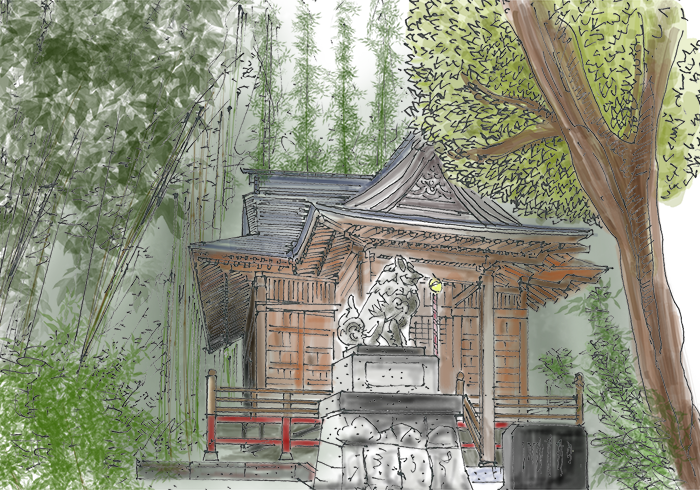
Just a 3-minute walk past the torii gate next to the entrance of Kominka Marcelo, you will reach Sawawachigi-jinjya Shrine. As you walk up the stone steps lined through the bamboo grove, you will be embraced by a crisp, serene, and cool atmosphere.
Origins & History
Origins & History
According to shrine lore, Yamato-takeru-no-mikoto—a legendary prince and hero of ancient Japanese history known for conquering eastern and southern territories—passed through this land on his way back from his eastern campaign, worshiping and enshrining the local deity Sawa-no-kami. It was originally enshrined on Sawa-yama (Kamikotsuda-azanita), located about 4 km northwest of its current location. Because there was a large mountain stream (sawa) there, it was called Sawa-yama. During his campaign, Yamato-takeru-no-mikoto worshiped Sawa-no-kami, defeated a mythical serpent inhabiting Sawa-yama, and enshrined a sacred mirror at the peak of Mt. Shiobara (Kagami-tsuka).
Key Historical Events
Key Historical Events
In September 801 (Enryaku 20), Sakanoue no Tamuramaro rested his troops at Sawa-yama and prayed for victory in battle. The following year, a ritual thanksgiving (hosai) was performed to offer gratitude for the victory. In August 1052 (Eisho 5), Minamoto no Yoshiie prayed for victory and dedicated a waka poem to the shrine. In 1569 (Eiroku 12), the shrine was relocated to the summit of Mt. Shiobara, and later moved down to its present location on the mountainside. In May 1874 (Meiji 7), it was designated as a village shrine (Goshya). Previously, the shrine faced south like the torii gate, but in 1970 (Showa 45), the main hall (Honden) was relocated lower down to sit alongside the worship hall (Haiden). While the “Shikinaisha Chosa Hokoku” (Survey Report of Historic Shinto Shrines) states this was done to face the ocean to the east, local tradition suggests it was to position the shrine with its back toward its ancestral home of Sawa-yama.
About the Shrine Name
About the Shrine Name
The wooden plaque (hengaku) on the worship hall reads “Sawa Shrine,” while the plaque on the main hall reads “Sawa Daimyojin.” However, a ridge tag (munafuda, a wooden plaque recording architectural details) dated April 1796 (Kansei 8) bears the name “Sawawachigi Shrine,” making “Sawawachigi-jinjya” the official name of the shrine today.
Architecture & Enshrined Deity
Architecture & Enshrined Deity
The worship hall (Haiden) is built in the Irimoya-zukuri (hip-and-gable roof) style, while the main hall (Honden) features Nagare-zukuri (flowing gabled roof) architecture. The main deity currently enshrined here is Ama-no-higatakushihigata-no-mikoto.
Annual Rituals at Kominka Marcelo
Annual Rituals at Kominka Marcelo
Kominka Marcelo has deep historical ties to this shrine. Every year at year-end, we hold a traditional Shinto ritual including prayers, hosted together with local villagers and the shrine priest.